Private Label Leather Goods | Guangzhou, China
OEM vs ODM Leather Bags: What Buyers Should Know
For a private label bag order, the practical difference between OEM and ODM is how much of the product you have already defined. Bring your own construction and specifications for an OEM discussion, or start with a supplier reference and agree the changes for an ODM discussion. Both routes need a written specification and sample approval before bulk production.
Choose the starting point you can actually document
In a Zise sourcing discussion, OEM means reviewing a buyer-defined bag. A technical pack or physical sample gives us a starting point for dimensions, panels, pockets, materials, hardware and assembly. If you only have a front-view image, identify the missing details rather than treating the photograph as a complete production specification.
ODM starts with a reference construction that you want to adapt for your collection. Specify which parts should stay and which should change. A new color or interior label is a different development request from a new body shape or pocket layout. We review feasibility and quotation conditions for the actual changes.
Private label describes the branding of the finished product. It can accompany either route. The words OEM, ODM and private label alone do not establish design ownership, exclusivity or permission to reproduce a third-party design. Discuss those terms separately and provide artwork or references you are authorized to use.
Use a real reference to make the discussion specific
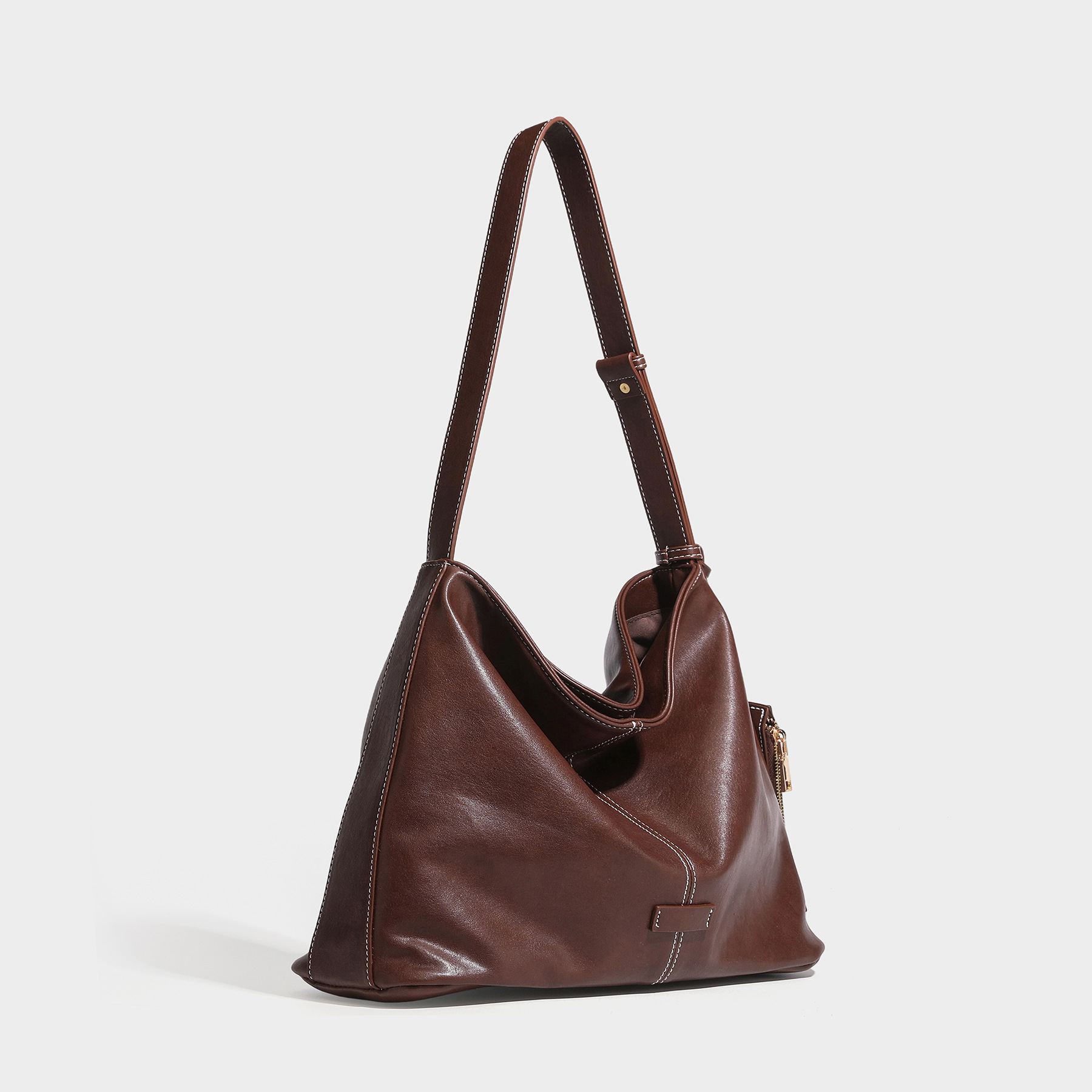
If you begin with M13P6062, your brief might retain the reference body and ask us to review a different color, your logo and an interior pocket change. List each requested change against the reference. The current source records a main compartment, slip pocket and zipper pocket; any replacement layout needs its own drawing or measurements.
If your design has a different body shape, closure and strap attachment, send those details as a buyer-defined development brief. Naming a similar reference can explain the direction, but it does not establish that the same price, tooling or timing will apply.
The shoulder bag collection contains seven PU references and one canvas reference, M13L6050. The handbag sample collection provides another set of documented shapes. Do not assume that every photographed bag uses the same material; check the material notes for the selected reference.
What to send for an OEM quotation
- A technical pack, authorized reference sample, or front, side, back and interior views.
- Body measurements with units, plus separate handle drop and strap length requirements.
- Material direction, surface finish, lining and color references. Mark any specification that is still open.
- Pocket dimensions, closure type, hardware finish and attachment details.
- Logo artwork, size and placement; packaging, labels and shipping marks.
- Quantity by style and color, delivery country and requested schedule.
Include a target price if you have one, and state the currency and intended shipping terms. A target helps us review the specification; it is not a confirmed quotation. If you need a particular material test or inspection arrangement, include it before sampling and costing.
What to send when adapting an ODM reference
Start with the reference code. Then write a change list that separates the body, material, color, branding, hardware, strap and pockets. State whether you want to retain the photographed construction or need a change that must be assessed through a new sample.
For example, an M13P0781 brief can identify the documented back pocket and ask whether its opening or placement can be changed. A useful brief includes the requested pocket measurements and what the buyer intends to carry. A broad request such as “make it more practical” leaves the production decision unresolved.
Read the shoulder bag sampling guide for a reference-based brief. Use the logo customization guide to specify artwork and placement rather than approving a logo from a mock-up alone.
Confirm quantity and timing for the selected specification
The documented shoulder bag reference program has a starting condition of 100 pieces per color and 200 pieces per order, with seven-day sampling and a 30-day production lead-time reference. These are the supplied conditions for that program, not a promise for every OEM design, material or custom component.
Ask us to confirm how the minimum applies to each style and color, which changes are included, and when each quoted lead time starts. New hardware, special materials, revised construction or packaging requirements need project review. Ask separately about sample charges, revision timing and transport; the listed production lead time does not establish a delivery date at your destination.
The low-MOQ order planning guide explains how to prepare a color and quantity breakdown without assuming that unrelated styles can share one minimum.
Approve a complete sample and keep the decision record
For either development route, check the sample against the agreed dimensions, material, color, pockets, strap, hardware and branding. Record changes with measurements and annotated images. Identify the approved version so that an earlier sample or quotation image is not mistaken for the bulk reference.
Agree the packing specification and inspection scope before production. The quality-control page explains the checkpoints to discuss, including construction, function, logo and packing review. If you need third-party inspection or particular tests, confirm their scope, timing and cost for the order.
Send your reference and change list
Share the style code or authorized design, quantities by color, material direction and requested changes. We can then review the development route and the information still needed for a quotation. See our OEM and ODM service workflow and factory information for the supporting process.
Request a shoulder bag development review or send a handbag brief.
Updated October 17, 2026. Sample-specific details follow Zise’s documented references. Final material, feasibility, order conditions and timing require confirmation for the buyer’s specification.
Ready for sourcing review